Venice Film Festival is moving along swiftly and we're already over half way there. However, it still isn't ceasing to amaze me. And I'm talking about the festival in general not just the films. Before I go any further, I must apologise for the repeated reference to Quentin Tarantino below. (I'm in no way a fan, but he is the head of this year's Venice jury and therefore here he is God!)
A few days ago I saw the Chilean film Post Mortem (Pablo Larrain). I was one of the last people let in from the long queue and the only remaining seats were the front row of the balcony in Sala Grande. These are the best seats in the house! As soon as I'd taken my seat I looked down and saw Mister Tarantino himself. I couldn't help but be bowled over by the event. As it happens this is the best film I've seen here yet. It is a dramatic love story covering every single emotion. Hopefully it will get widely distributed and everyone can see it at the IFI.
Other great films I've seen include Essential Killing by Jerzy Skolimowski, starring Vincent Gallo. This war/ survival film is similar to The Road, but I think the latter is marginally better.
Silent Souls (Aleksei Fedorchenko) was another favourite of mine. It is a Russian film based around death. It is stylishly 'slow' (like any good Russian film) and slightly more avant-garde than many others, so an international release may be less likely.
In the last few hours I saw Balada Triste de Trompeta by Alex de la Iglesia. Huge hype has gathered around this film since it's premiere screening last night, at which "Tarantino laughed harder than anyone else there". It's a Spanish film that could be the next Pan's Labyrinth. It combines Tarantino and Tim Burton's style, but still feels very fresh and new. I was in the minority who thought the film was just ok, but I'll be very surprised if it doesn't reach Ireland in the coming year. An Oscar nomination is also a possibility.
The last film I'll mention here is the Happy Poet. It's an american 'indie' flick, that is actually independently produced, unlike so many 'indie flicks' these days. The main character struggles to start up an organic food stand. It is an endearing parallel of a film maker trying to get his film made without selling out.
There'll be further blogs form the Venice Film Festival in the coming days.
Conall O Duibhir
Member of the Young Cinephiles Jury
Venice Film Festival
Thursday, September 9, 2010


Tuesday, September 7, 2010
Hurling Fever!
The GAA hurling season may just have finished ( well done to Tipperary and commiserations to Kilkenny) but the IFI Irish Film Archive is still hurling obsessed as we are put the finishing touches to our Archive hurling DVD. Encouraged by the tremendous success of our Irish Destiny and Seoda DVDs, which were released last Autumn, we decided to dig deep into the Archive collections and produce another DVD, this time with the focus on sport.
Highlights of All Ireland Hurling and Football Finals were routinely filmed by the National Film Institute (before it was renamed the Irish Film Institute) from 1948 onwards and generally lasted 10-20 minutes; in addition to highlights of the Senior and Minor games, the films showed the build-up to the match and the players in training, and generally had a tongue-in-cheek newsreel quality. Over the last few months the Archive staff have been painstakingly assessing the sound and picture elements of GAA film material held in our vaults, selecting the best quality elements and transferring them to a digital format ready for publishing on DVD. This DVD will feature All Ireland hurling finals from 1948 up to 1959 and we hope to follow it with a compilation of GAA football finals of the same period.

As with our other DVD releases, time and effort has also been spent producing an accompanying booklet with images and explanatory notes. The booklet will be full of interesting pictures and match notes will be provided by sports historian Dr. Seán Crosson. It will be an absolute must for GAA fans, but the shots of Dublin in the 1940s and 1950s, and scenes of crowds making their way from Heuston Station, along O'Connell Street and up Jones's Road, will also appeal to the those who remember a quieter, slower paced Dublin.
Keep checking our blog for details of the DVD release later in the year.
Kasandra O'Connell
Head of Irish Film Archive
Highlights of All Ireland Hurling and Football Finals were routinely filmed by the National Film Institute (before it was renamed the Irish Film Institute) from 1948 onwards and generally lasted 10-20 minutes; in addition to highlights of the Senior and Minor games, the films showed the build-up to the match and the players in training, and generally had a tongue-in-cheek newsreel quality. Over the last few months the Archive staff have been painstakingly assessing the sound and picture elements of GAA film material held in our vaults, selecting the best quality elements and transferring them to a digital format ready for publishing on DVD. This DVD will feature All Ireland hurling finals from 1948 up to 1959 and we hope to follow it with a compilation of GAA football finals of the same period.

Keep checking our blog for details of the DVD release later in the year.
Kasandra O'Connell
Head of Irish Film Archive
Monday, September 6, 2010
The 'new' Metropolis at the National Concert Hall
Dublin got its first chance to see the newly restored, almost complete Metropolis on Saturday night at a fantastic live performance at the National Concert Hall.
Metropolis is one of the those films that even if you haven't seen it, you know it! Its imagery is so iconic that it has defined our aesthetic of 'the future' and is instantly recognisable to anyone who has ever seen a science fiction film or car advert! Seeing it again on Saturday night with the extra 25 minutes of restored footage was a reminder of why it was so central to 20th century culture and why its influence can still be seen. It really is extraordinary, and although silent (and now very long) it kept the 1000 strong audience at the National Concert Hall engrossed and captivated for the full two and a half hours.

You can clearly see the newly restored scenes as they were taken from a badly damaged 16mm print and there is a noticeable change in quality and size. This doesn't affect the narrative and it is fascinating to be able to recognise the 'new' bits and track the restoration. Most memorable for me were the new scenes of the children fleeing the underground city which are extraordinarily prescient of events in Europe in the two decades following this film and the much more extensive presence of the menancing (and slightly camp) 'Thin Man'. Although still fantasically crazy, the narrative is definitely more coherent and the extra detail helps make sense of some of the rapid plot twists.

Two and a half hours of live orchestral accompaniment is a tough ask for musicians and they did an incrediable job under the guidance of conductor Helmut Imig. Earlier this year Helmut conducted one of the first performances of the newly restored versions in Germany and his involvement ensured we heard Huppertz's great score at its best. The Goethe Institut supported Helmut's trip to Dublin and I would like to thank them for this invaluable contribution to the event. The IFI hasn't collaborated with the National Concert Hall for a while but it was great to work with them again and we are already planning some more projects for the future.
.jpg)
For those of you who missed Saturday night don't miss Metropolis when it opens this Friday. With robot women, sexual obsession, revolution and romance there is something for everyone and absolutely lives up to its reputation as one of the best films ever made. And don't forget that September is the month of Metropolis at the IFI and we have two accompanying seasons; one celebrating the earlier work of its director Fritz Lang and the other presenting classic science fiction films that have been influenced by this great classic.
To book tickets for Metropolis at the IFI, click here.
Sarah Glennie
Director
Metropolis is one of the those films that even if you haven't seen it, you know it! Its imagery is so iconic that it has defined our aesthetic of 'the future' and is instantly recognisable to anyone who has ever seen a science fiction film or car advert! Seeing it again on Saturday night with the extra 25 minutes of restored footage was a reminder of why it was so central to 20th century culture and why its influence can still be seen. It really is extraordinary, and although silent (and now very long) it kept the 1000 strong audience at the National Concert Hall engrossed and captivated for the full two and a half hours.
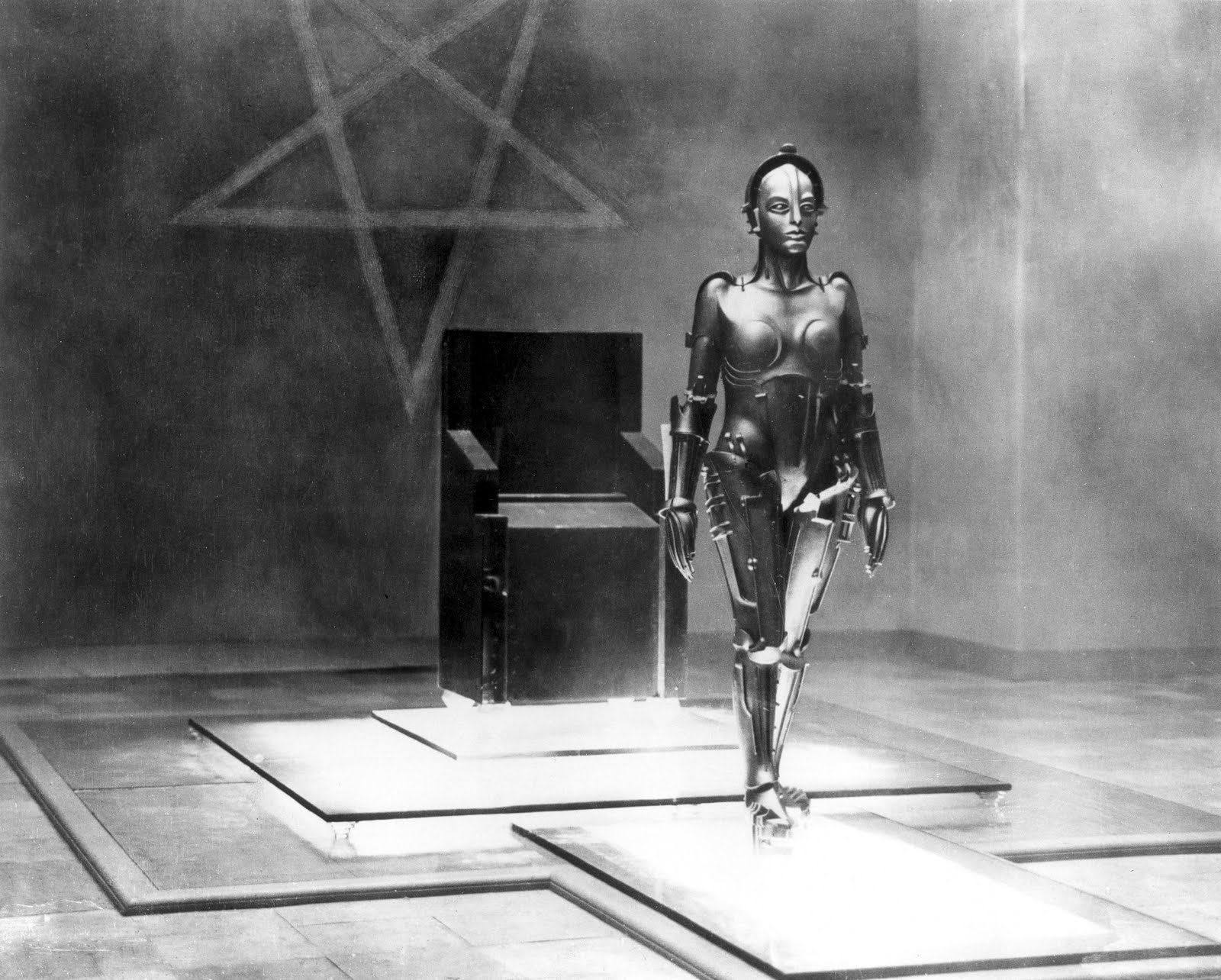
You can clearly see the newly restored scenes as they were taken from a badly damaged 16mm print and there is a noticeable change in quality and size. This doesn't affect the narrative and it is fascinating to be able to recognise the 'new' bits and track the restoration. Most memorable for me were the new scenes of the children fleeing the underground city which are extraordinarily prescient of events in Europe in the two decades following this film and the much more extensive presence of the menancing (and slightly camp) 'Thin Man'. Although still fantasically crazy, the narrative is definitely more coherent and the extra detail helps make sense of some of the rapid plot twists.

Two and a half hours of live orchestral accompaniment is a tough ask for musicians and they did an incrediable job under the guidance of conductor Helmut Imig. Earlier this year Helmut conducted one of the first performances of the newly restored versions in Germany and his involvement ensured we heard Huppertz's great score at its best. The Goethe Institut supported Helmut's trip to Dublin and I would like to thank them for this invaluable contribution to the event. The IFI hasn't collaborated with the National Concert Hall for a while but it was great to work with them again and we are already planning some more projects for the future.
.jpg)
For those of you who missed Saturday night don't miss Metropolis when it opens this Friday. With robot women, sexual obsession, revolution and romance there is something for everyone and absolutely lives up to its reputation as one of the best films ever made. And don't forget that September is the month of Metropolis at the IFI and we have two accompanying seasons; one celebrating the earlier work of its director Fritz Lang and the other presenting classic science fiction films that have been influenced by this great classic.
To book tickets for Metropolis at the IFI, click here.
Sarah Glennie
Director
Report from Venice Film Festival
Conall O Duibhir, a member of the Young Cinephiles Jury, reports from the Venice Film Festival
I am here on the Lido in Venice and it is nothing like I thought it would be. It's crazy!… in the best way possible. The island is completely overtaken by the glamourous festivities surrounding the festival. Red carpets, huge golden lions, Scorsese, and lots and lots of films of course. The scale of the festival is enormous. And here I am in the middle of this mad world. Where else can you meet Michael Cera and have a casual chat about film (which he knows little about), befriend your new favourite actor, and discuss films with their directors?
I am participating in '27 Times Cinema', which is an initiative to engage with young filmgoers in Europe. There are 27 young people, one from each EU state here. 14 women and 13 men. An 'ideal' audience profile, if that's possible. Our days are filled with watching all the films in 'Venice Days' (which is a sidebar to the main festival that focuses on art-house and provocative films), attending discussions and fitting in as many other films as we can. The films are varying in strength. I can't stay awake for all because the long days of cinema and little sleep are so draining! While Aronofsky's 'The Black Swan' (which I didn't see) has been well received over all, Sophie Coppola's 'Somewhere' felt like a tired 'Lost in Translation 2'
I will post again with more details on some of the films I'm seeing, until then I'm off to debate what's happened to American independent films.
Conall O Duibhir
I am here on the Lido in Venice and it is nothing like I thought it would be. It's crazy!… in the best way possible. The island is completely overtaken by the glamourous festivities surrounding the festival. Red carpets, huge golden lions, Scorsese, and lots and lots of films of course. The scale of the festival is enormous. And here I am in the middle of this mad world. Where else can you meet Michael Cera and have a casual chat about film (which he knows little about), befriend your new favourite actor, and discuss films with their directors?
I am participating in '27 Times Cinema', which is an initiative to engage with young filmgoers in Europe. There are 27 young people, one from each EU state here. 14 women and 13 men. An 'ideal' audience profile, if that's possible. Our days are filled with watching all the films in 'Venice Days' (which is a sidebar to the main festival that focuses on art-house and provocative films), attending discussions and fitting in as many other films as we can. The films are varying in strength. I can't stay awake for all because the long days of cinema and little sleep are so draining! While Aronofsky's 'The Black Swan' (which I didn't see) has been well received over all, Sophie Coppola's 'Somewhere' felt like a tired 'Lost in Translation 2'
I will post again with more details on some of the films I'm seeing, until then I'm off to debate what's happened to American independent films.
Conall O Duibhir
Friday, September 3, 2010
Juliette Binoche and Gerard Depardieu's War of Words...
Juliette Binoche stars in Certified Copy which opens at the IFI today. Watch the trailer here.
Juliette Binoche picked up the Best Actress Award at the Cannes Film Festival 2010 for her role as an antiques art dealer in Abbas Kiarostami's intriguing Certified Copy. But not everyone seems convinced by her talents...
Last week, in an interview for an Austrian magazine, Gerard Depardieu gave his opinion on the French actress. Without even being asked, Depardieu said "Please can you explain to me what the mystery of Juliette Binoche is meant to be?... I would really like to know why she has been so esteemed for so many years. She has nothing, absolutely nothing." He then added "What has she ever had going for her?"

Binoche, currently in Britain to promote Certified Copy, responded to his comments saying
"I don't know him and I don't know what I did to him." She added "I provoked him without knowing I provoked him, I think."
Read more about their war of words here.
If you want to judge Juliette's latest performance for yourself, Certified Opens today at the IFI and runs until September 23rd. For more information, click here.
Ross Keane
Head of Marketing & Communications
Juliette Binoche picked up the Best Actress Award at the Cannes Film Festival 2010 for her role as an antiques art dealer in Abbas Kiarostami's intriguing Certified Copy. But not everyone seems convinced by her talents...
Last week, in an interview for an Austrian magazine, Gerard Depardieu gave his opinion on the French actress. Without even being asked, Depardieu said "Please can you explain to me what the mystery of Juliette Binoche is meant to be?... I would really like to know why she has been so esteemed for so many years. She has nothing, absolutely nothing." He then added "What has she ever had going for her?"

"I don't know him and I don't know what I did to him." She added "I provoked him without knowing I provoked him, I think."
Read more about their war of words here.
If you want to judge Juliette's latest performance for yourself, Certified Opens today at the IFI and runs until September 23rd. For more information, click here.
Ross Keane
Head of Marketing & Communications
Thursday, September 2, 2010
Venice Film Festival Updates
Today is the start of the Venice Film Festival and Venice Days, the independently run section highlighting European Cinema.
This year, Europa Cinemas and Venice Days invited twenty seven young EU film enthusiasts (aged 18-25) to attend the festival, watch the Venice Days programme, meet filmmakers and serve on a ‘Young Cinephiles’ jury.
IFI was delighted to be asked to nominate some candidates, so we ran a competition which involved writing film reviews and then submitted these for consideration to Europa Cinemas. Conall Ó Duibhir was chosen to represent IFI and he headed off for Venice yesterday. Conall was a member of our IFI Teen Club and also a brilliant volunteer at the IFI Family Festival. To say he loves film is somewhat of an understatement (he did feel the need to put aside Leaving Cert. studies in order to complete his entry on time…)
Check back here for regular blogs and updates from Conall on his Venetian adventures.
Alicia McGivern
Head of Education
This year, Europa Cinemas and Venice Days invited twenty seven young EU film enthusiasts (aged 18-25) to attend the festival, watch the Venice Days programme, meet filmmakers and serve on a ‘Young Cinephiles’ jury.
IFI was delighted to be asked to nominate some candidates, so we ran a competition which involved writing film reviews and then submitted these for consideration to Europa Cinemas. Conall Ó Duibhir was chosen to represent IFI and he headed off for Venice yesterday. Conall was a member of our IFI Teen Club and also a brilliant volunteer at the IFI Family Festival. To say he loves film is somewhat of an understatement (he did feel the need to put aside Leaving Cert. studies in order to complete his entry on time…)
Check back here for regular blogs and updates from Conall on his Venetian adventures.
Alicia McGivern
Head of Education
Wednesday, September 1, 2010
Neil Sinyard talks about The Leopard
The Leopard closes at the IFI on Thursday September 2nd. Book tickets quickly as the final screenings are selling fast.
The magisterial opening sets both tone and theme. The camera approaches an Italian nobleman’s house, lovingly recording the veils and curtains of the rooms fluttering in the gentle breeze, before eavesdropping on the patriarch and his family at morning prayers. But there are disturbances outside and the formality of the occasion is interrupted by the discovery of a dead soldier on their grounds, killed by rebels. It is an early indication of an aristocratic life about to be changed by the social forces of the Risorgimento [the movement for the political unification of Italy during the 19th century] that can no longer be held back at the family gate. Prince Salina (a towering performance from Burt Lancaster) will come to recognise that his society must adapt in order to survive and that, in his words, “things will have to change in order that they remain the same.” Thus he will collaborate in an arranged marriage between his opportunistic nephew (Alain Delon) and the low-born daughter (Claudia Cardinale) of a wealthy trader, Don Calogero (Paulo Stoppa), who is a representative of the rising bourgeoisie and symbol of the new social order to which the Prince and his kind must adjust. All these threads come together in one of the most remarkable set-pieces in all cinema: an extended Ball sequence, lasting for almost a third of the film’s length, during which the Prince’s acknowledgement of the new order is confirmed by the waltz he shares with his nephew’s fiancée, and the themes of adaptation and adjustment come together in a swirl of changing partners.

At one stage in the film, the Prince has remarked that he “feels astride between two worlds, ill-at-ease in both.” It suggests a connection between him and Visconti, whose whole career seemed an attempted reconciliation of opposites in his personality and style: between aristocrat and communist, aesthete and social critic, and between neo-realist harshness and decorative decadence. ‘The Leopard’ is a pivotal film for him, looking back to ‘Senso’ (also about the Risorgimento period and the relation of the individual to huge historical forces) and forward to ‘Death in Venice’ (the decay of old Europe) and even a late masterwork like the 1974 ‘Conversation Piece’ (which also concerns itself with the uneasy integration of a civilised, cultured class into a cruder, undisciplined but vital community). With its sensitivity to both historical necessity and the sadness of change, Giuseppe di Lampedusa’s posthumously published novel might have been written for Visconti and it is impossible to conceive how it could have been more resplendently realised on screen nor more beautifully scored, photographed and designed. As intelligent historical cinema on an epic scale, this has never, in my experience, been surpassed.
Copyright © Neil Sinyard and the Irish Film Institute.
The magisterial opening sets both tone and theme. The camera approaches an Italian nobleman’s house, lovingly recording the veils and curtains of the rooms fluttering in the gentle breeze, before eavesdropping on the patriarch and his family at morning prayers. But there are disturbances outside and the formality of the occasion is interrupted by the discovery of a dead soldier on their grounds, killed by rebels. It is an early indication of an aristocratic life about to be changed by the social forces of the Risorgimento [the movement for the political unification of Italy during the 19th century] that can no longer be held back at the family gate. Prince Salina (a towering performance from Burt Lancaster) will come to recognise that his society must adapt in order to survive and that, in his words, “things will have to change in order that they remain the same.” Thus he will collaborate in an arranged marriage between his opportunistic nephew (Alain Delon) and the low-born daughter (Claudia Cardinale) of a wealthy trader, Don Calogero (Paulo Stoppa), who is a representative of the rising bourgeoisie and symbol of the new social order to which the Prince and his kind must adjust. All these threads come together in one of the most remarkable set-pieces in all cinema: an extended Ball sequence, lasting for almost a third of the film’s length, during which the Prince’s acknowledgement of the new order is confirmed by the waltz he shares with his nephew’s fiancée, and the themes of adaptation and adjustment come together in a swirl of changing partners.

At one stage in the film, the Prince has remarked that he “feels astride between two worlds, ill-at-ease in both.” It suggests a connection between him and Visconti, whose whole career seemed an attempted reconciliation of opposites in his personality and style: between aristocrat and communist, aesthete and social critic, and between neo-realist harshness and decorative decadence. ‘The Leopard’ is a pivotal film for him, looking back to ‘Senso’ (also about the Risorgimento period and the relation of the individual to huge historical forces) and forward to ‘Death in Venice’ (the decay of old Europe) and even a late masterwork like the 1974 ‘Conversation Piece’ (which also concerns itself with the uneasy integration of a civilised, cultured class into a cruder, undisciplined but vital community). With its sensitivity to both historical necessity and the sadness of change, Giuseppe di Lampedusa’s posthumously published novel might have been written for Visconti and it is impossible to conceive how it could have been more resplendently realised on screen nor more beautifully scored, photographed and designed. As intelligent historical cinema on an epic scale, this has never, in my experience, been surpassed.
Copyright © Neil Sinyard and the Irish Film Institute.
Subscribe to:
Posts (Atom)