Monday, October 24, 2011

IFI Horrorthon 2011… The Return

Let’s elaborate further upon the highlights of this year’s IFI Horrorthon programme, for the week that’s in it: IFI Horrorthon 2011 kicks off this Thursday, running through the weekend to our very favourite day of the year… Who doesn’t love Halloween?  


I’d like to begin with a simple, searching query: what’s your favourite scary movie? It’s the mantra proffered by the killer in Wes Craven’s original Scream, and a highly subjective poser indeed: the finest shock cinema, after all, taps directly into our deepest, darkest places, enabling us to tackle the fundamental fears that inform who and what we are.

It’s always been the case that horror cinema can act as a brutally effective mirror to the world in a way that any number of good-meaning but ineffectual prestige movies can’t. Any way you look at it, films like Hostel, Land Of The Dead, A Serbian Film and Kevin Smith’s underrated Red State say far more about the political brutalities of the last decade than multi-million dollar mediocrities like Rendition and Green Zone. At the alternate end of the spectrum, a decent ghost story always plays well; witness the spectacular success of Paranormal Activity 3, which just scored the largest US opening for a horror movie in box-office history, or Insidious, which is already the most profitable release of 2011. 

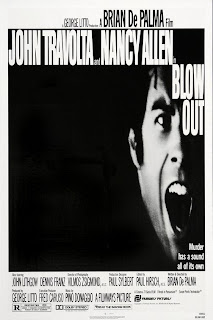
Blow Out

What the IFI Horrorthon programme always attempts to do is juxtapose the finest new fright cinema with classics from a bygone age, movies that say something about their era – while still thrilling us years later. This year we’re dusting off Brian De Palma’s Blow Out, a masterful conspiracy thriller from the mad genius of the movie brat generation and one of the final farewells from the last true golden age of American cinema; it plays beautifully alongside our double-bill of ‘80s vigilante flicks, The Exterminator and Maniac Cop, reactionary exploitation flicks gleefully giving the (severed) finger to the Reagan era.

The Exterminator

Elsewhere at this year’s IFI Horrorthon, you’ll find Clint Eastwood’s seminal Play Misty ForMe, a proto-genic psycho-stalker flick that established the template for ongoing generations of copycats, most notably Fatal Attraction, and a 25th anniversary screening of James Cameron’s masterpiece Aliens, a joyous relic of a pre-CGI era… Fact: the moment aliens started being pixellated, they stopped being scary. Then there are the classics that we dust off simply because we loved them as kids, and want to turn a whole new generation onto them, while geeking out at them on the big screen: we couldn’t be more delighted to present Mike Hodges’ 1980 ‘re-imagining’ of Flash Gordon (with that Queen soundtrack…) and Jim Henson’s stunning 1982 fantasy epic The Dark Crystal, movies that positively scream to be seen on the big screen.

The Dark Crystal

Thusly, we look forward by looking back. The ongoing evolution of the horror movie is a fascinating and unpredictable one: it’s a genre that (somewhat appropriately) constantly cannibalises itself in search of the Next Big Thing. Just when you think you’ve seen absolutely everything, you catch that unheralded gem that makes it fresh – and frightening – all over again. So make a point to catch some of this year’s fresh IFI Horrorthon discoveries – you can choose from Kidnapped, Snowtown, Rage, Rabies, The Hunt, A Horrible Way To Die, The TheatreBizarre and so many more. You’ll fall in love with being terrified all over again.

Derek O'Connor
Associate Programmer
IFI Horrorthon


For more information on films, bookings and special guests, visit the IFI Horrorthon website www.ifi.ie/horrorthon2011/.

Join the conversation on Twitter - use #IFIHorrorthon and follow @IFI_Dub & @IFI_Horrorthon! 


Thursday, October 20, 2011

Welcome to IFI Horrorthon 2011

IFI Horrorthon is a labour of love, a Festival curated by horror movie fans for horror movie fans, and a truly unique event on the IFI calendar. 


Every year, IFI Horrorthon brings you the best shock cinema from across the globe, and trust us - this year’s programme does not disappoint. Let’s be honest, here: Hollywood simply isn’t delivering the goods right now when it comes to cool horror product, having filmed every vaguely remake-able title imaginable and flogged existing franchises to a protracted and unpleasant death… Not that there aren’t talented young U.S. filmmakers out there: we’re delighted, for example, to be screening micro-budget indie A Horrible Way To Die from director Adam Wingard, whose next movie, You’re Next, is already being touted as the Next Big Sensation. Wingard takes the Mumblecore approach to the horror film, suggesting a whole new way forward for the genre – and we’re loving it. 


Elsewhere, you’ll find splendid new work from the U.K, (haunted house tale The Awakening, Wicker Man companion piece The Wicker Tree, online cautionary tale Panic Button and the lovable Zombie Undead), France (urban survival piece The Hunt), Spain (intense home invasion saga Kidnapped), Japan (J-Horror teen flick Tomie Unlimited), Germany (underground nightmare Urban Explorer), Australia (slow-burning true-life serial killer saga Snowtown) and The Netherlands (undead Santa slay-fest Saint) – an eclectic smorgasbord of demented delights, and bloody good fun at that.


There’s much, much, much more: try a pair of demented anthology flicks, Canadian entry The Theatre Bizarre (directors include FX maestro Tom Savini and the welcome return of Hardware helmer Richard Stanley) and the unmissable Chillerama, a gonzo love letter to horror hounds from our old IFI Horrorthon buddy Tim Sullivan, who will be present to introduce the screening. Sullivan also produced a short film adaptation of Stephen King’s classic short story One For The Road, starring Phantasm hero Reggie Bannister and directed by talented Dubliner Paul Ward – we’re delighted to present the Irish premiere. Also doing the home team proud is the prolific Jason Figgis, who presents his latest feature-length documentary, a haunting tale entitled Cathnafola. And that’s before we get to the elaborate programme of scream classics screening at IFI Horrorthon 2011 – we’ll tell you about that next time… Until then, check out our programme online – and be very, very afraid of the dark.

Derek O'Connor
Associate Programmer
IFI Horrorthon

Join the conversation on Twitter - use #IFIHorrorthon and follow @IFI_Dub & @IFI_Horrorthon!

Wednesday, October 19, 2011

The IFI in New York

It has been a busy year for the IFI as we have been working on a number of major projects in the US as part of Imagine Ireland, Culture Ireland’s year of Irish Arts in America 2011.

Guests of the Nation at NCH

We started in March with Hidden Ireland, a 13-week long programme of documentary films made in and about Ireland which was presented at the New York Public Library for the Performing Arts at the Lincoln Center. The programme opened with The Seasons, the extraordinary film from the IFI Irish Film Archive which documents daily life in a rural Mayo village in the 1930s. Harpist Cormac de Barra and musicians from Kila presented live musical accompaniment and the film was met with a very emotional reaction from the audience, which included Milo O’Shea and Angela Lansbury.

Hidden Ireland

We returned to New York in May for Revisiting the Quiet Man: Ireland on Film at MoMA. This two week programme, comprising 14 films, was curated by Gabriel Byrne.  Gabriel took John Ford’s iconic portrayal of rural Ireland in The Quiet Man as the starting point for an exploration of representations of Irish identity on film, with titles ranging from Darby O’Gill... to Hunger. The programme was animated by some great discussions with special guests who joined us over the two weeks. Starting with Gabriel himself who discussed his love of The Quiet Man with Dr. Luke Gibbons on the opening night; Milo O’Shea made a surprise appearance to introduce his first film This Other Eden, and Jim Sheridan, Enda Walsh and Lance Daly all gave different generational perspectives on the extent to which Irish identity informs their work. Over 4,000 people attended the films over the two weeks and we were bowled-over by the level of interest shown by the MoMA audience in finding out more about Irish culture.

Revisiting the Quiet Man: Ireland on Film

Our final leg of our New York programme was a gala presentation and US premiere of Denis Johnston’s 1935 film Guests of the Nation at the Alice Tully Hall in the Lincoln Center on September 22nd. The IFI Irish Film Archive has restored this extraordinary film and given it new life with a newly commissioned score by Niall Byrne. Niall’s lyrical and emotive music was premiered at the National Concert Hall on September 11th with a live orchestral performance by RTE Concert Orchestra, and received a rapturous response from the 900-strong Dublin audience. The response in New York was no less ecstatic from an audience clearly moved by Denis Johnston’s stark but deeply emotional portrayal of Frank O’Connor’s short story, which is so enhanced by Niall’s music.

Guests of the Nation, NCH Dublin

The programme began with two short films by one of Ireland’s most exciting young filmmakers – Andrew Legge. Andrew uses silent film with a contemporary perspective, and The Unusual Inventions of Henry Cavendish and The Lactating Automaton provided a great sense of continuum from one of Ireland’s earliest example of indigenous filmmaking (Guests of the Nation), showing New York audiences the depth of talent there now is amongst Irish filmmakers.

The Lactating Automaton

Gabriel Byrne introduced Guests of the Nation, comparing the work of the IFI Irish Film Archive to those of archaeologists – uncovering and preserving Ireland’s cultural heritage and critically ensuring that treasure such as Guests of the Nation are not lost for future generations. This work is central to the IFI and we believe passionately that the IFI Irish Film Archive is one of Ireland’s most important cultural resources. Our year in the U.S. has demonstrated to us the power of the films we hold in the IFI Irish Film Archive to tell Ireland’s story to a global audiences, challenge perceptions of what it means to be Irish, and offer unique insights into our culture. Film is a powerful and accessible tool by which to communicate with both ourselves and a wider international audience and the preservation of our film culture in the IFI Irish Film Archive allows us to do this.

Gabriel Byrne introducing Guests of the Nation, NYC

Imagine Ireland has given the IFI, and many, many other Irish artists and organisations a fantastic opportunity to deliver programmes of real ambition in the States this year. Irish arts has had a very tangible presence across the States, raising awareness and developing invaluable contacts. Many good things will come out of this – the IFI is already developing a number of further collaborations building on the partnerships we made this year and we are extremely grateful to Culture Ireland for their support of a series of very exciting programmes for the IFI.

Sarah Glennie
Director

For more information on Guests of the Nation with a new score by Niall Byrne, click [here]. 

Visit our Flickr account for more images from the film premiere at the National Concert Hall, Dublin [here] and at Alice Tully Hall, Lincoln Center in New York City [here]. 

Visit Imagine Ireland website http://www.imagineireland.ie/ for more information on other events featuring Irish arts in America. 

Thursday, October 13, 2011

IFI Education Programme for Autumn 2011 launch

‘..just pay attention. You might learn something’.
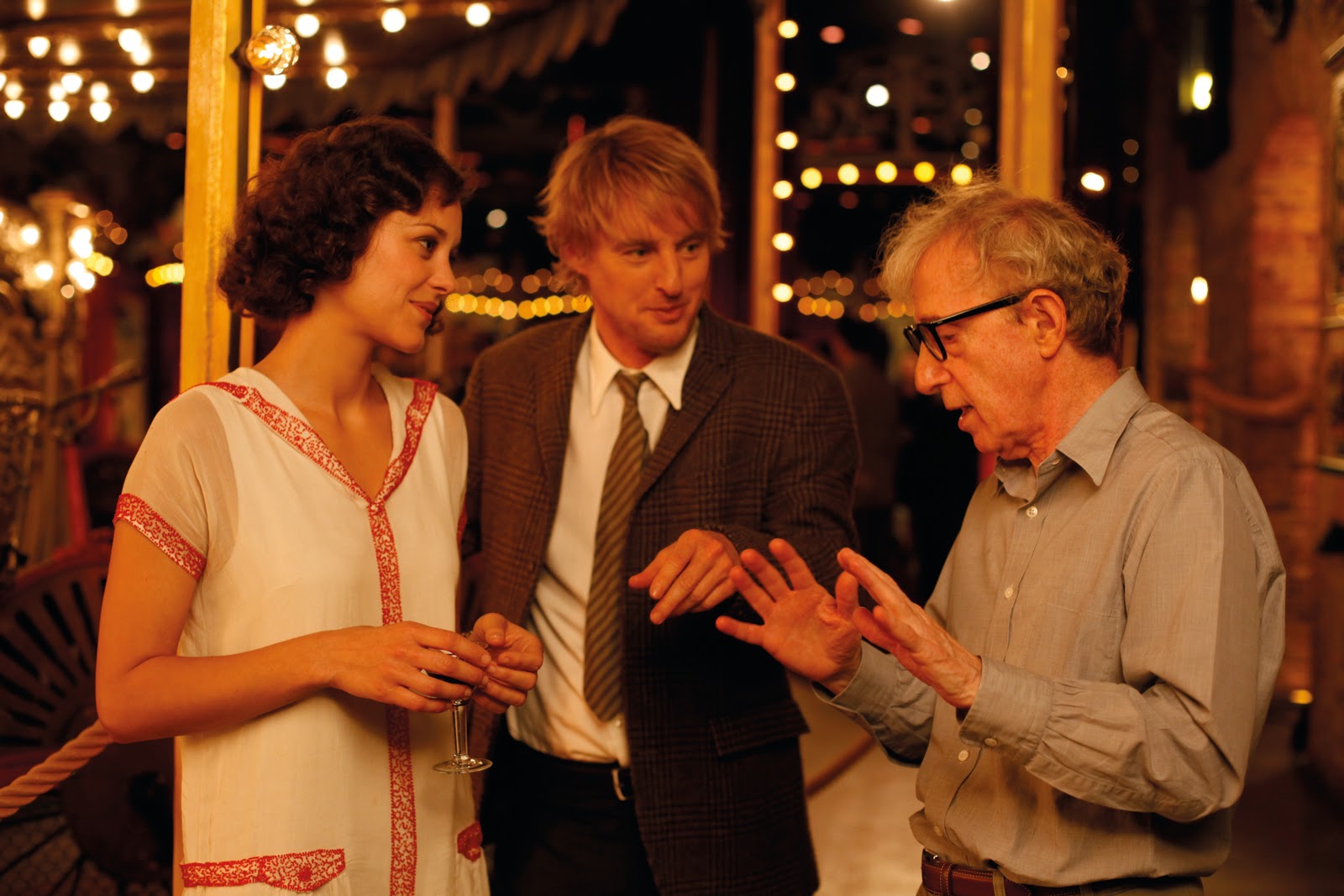
Classroom mantra? Yes perhaps, but also a line from Inez, girlfriend of Gil, in the very amusing, Midnight in Paris, Woody Allen’s latest film which showed for teachers here at IFI on September 26th, to launch our Education Programme for Autumn 2011. 

IFI Education Programme - Autumn 2011

In the film Owen Wilson plays a terrific Woody Allen, totally put upon by his brittle and complaining fiancée for whom his novel-writing is becoming less appealing by the day. Instead of showing eagerness to finely wine, dine and shop in Paris, Gil gets more pleasure out of walking the city’s streets late at night. Till one night through an amazing bit of time travel, he ends up in the company of some rather famous 1920s names. There’s Hemmingway, and he’s hanging out with the Fitzgeralds and Gertrude Stein. Alice B Toklas opens the door. Bunuel comes by. Someone offers a greeting to Trotsky. And so it goes on. One after another of Gil’s heroes crosses his midnight path, led by the luminous Adriana (Marion Cotillard) with whom Gil starts to fall in love. Of course in Allanesque ways it gets complicated, and that’s just part of its charm.

Midnight in Paris

Perfect Tuesday evening fare for our group of teachers, the screening was accompanied by a short presentation by Thomas McGraw Lewis, on The Industry Trust’s You-Make-the-Movies Campaign, dedicated to raising awareness of the implications of piracy on the film industry. The Trust are targeting young people through our Education Programme and a nationwide preview screening programme of The Help – based on the best-selling book will take place on October 25th.

IFI Education Programme Launch

Learning something about film is what we hope students can do through our programme. And we’ve a whole range of titles and events to facilitate this. A major tour of French-language title, Panique au Village, with accompanying studyguide by our former colleague, Baz Al-Rawi, will promote language learning. For students of German, there’s Neukölln Unlimited, the insightful and tense documentary about Lebanese streetdancers seeking asylum after long-term living in Berlin. This is presented with the support of Goethe Institute.   

TY students can follow the teen adventures of 15-year-old Oliver in the quirky Submarine or get their F1 thrills with Senna, the gifted Brazilian racing-driver. Other challenging slices of life come from South Africa’s Life above All about 12-year-old Chanda or Cold War spy story L’Affaire Farewell. 

Junior Cycle students needn’t feel left out - they can get out their dancing shoes for Jig, with Riverdance's Breandán de Gallaí to introduce the film. 

There’s Irish interest also in our primary programme with a free preview of Dolphin Tale, the heroic story of the injured dolphin whose tail is constructed by an Irish prosthetics doctor and The Runway, about Paco and his Spanish speaking pilot friend who wants to get back home. Director Ian Power will be at this screening to talk to the young audience.

IFI Education Programme Launch

There’s lots more in the programme to support different aspects of curricula as well as information on our Teen Club which aims to give young people an opportunity to see a range of film they wouldn’t usually have access to, outside of schooltime. The whole programme is dedicated to giving teachers and their students a range of opportunities to engage with film in different ways here at IFI or at partner venues around the country. Dee Quinlan and I in  IFI Education would like to know what you think of it. 

But let’s leave the last word to Woody Allen. For the times when classroom events might take a surreal turn this term, it might help to recall this scene from the film:

Luis Buñuel: A man in love with a woman from a different era. I see a photograph! 
Man Ray: I see a film! 
Gil: I see insurmountable problem! 
Salvador Dalí: I see rhinoceros! 

Alicia McGivern
Head of IFI Education

Click [here] (PDF - 1.7mb) to download the programme. 

For more information on IFI Education events, visit www.ifi.ie/education or contact Dee Quinlan (e: schools@irishfilm.ie, t: 01 679 5744).

See more photos from the IFI Education launch on Flickr [here].

Woody Allen's Midnight in Paris runs at the IFI until October 27th. For information and bookings, click [here].


Friday, October 7, 2011

Iranian Film Season Oct 8th – 26th

Before revolution comes revelation. After comes realisation. In trying to understand the protests and demonstrations that shook Iran in 2009 we are faced with a number of questions. Social media may have provided us with documents of the immediacy of protest but little in the way of analysis.


This season of films provides background, context and meaning to the events of 2009. What links the films on show is their commitment to social justice, dignity, freedom, respect and equality. They are calls for reform rather than revolution, at the centre of which lies the complicated position of women in Iranian society.
Jafar Panahi’s The Circle opens the season and is a searing indictment of a society in freefall. Yet the overwhelming tone of despair and despondency evident throughout is constantly undercut by stoicism and quiet defiance. This is beautifully realised in a scene near the end of the film when a prostitute is being taken to a police station. Her resigned, defiant, sad and vacant eyes, a symbol of a fallen world in which all are implicated.

The Circle

This theme is continued in Offside which exposes the absurdities of a system that seems intent on trying to control all aspects of life. It provides a perfect metaphor for the cat-and-mouse game, the split between the private and public persona, and the muddling through and ignoring of rules that constitutes daily life in the Islamic Republic. Both films whilst lauded on the international scene (Circle won The Golden Lion at Venice 2000 and Offside won a Silver Bear in Berlin 2006) were banned in Iran.

Equally as controversial, similarly lauded abroad, yet screened in Iran, (becoming box office hits in the process), are two films by Rassul Sadr Ameli, The GirlIn The Sneakers and I Am Taraneh, IAm 15 Years Old. He (an open supporter of the Green Movement who refused to have his films shown at the Fajr Film Festival in protest at the government crackdown) is no less a controversial figure than Panahi, yet his work has suffered less at the hand of the censor.

I Am Taraneh, I Am Fifteen Years Old

Part of the reason for this may lie in the fact that his films operate according to what might be deemed to be ‘more acceptable’ forms of social criticism. I Am Taraneh, I Am 15 in its tackling of a contentious issue such as teenage pregnancy does so in such a way that whilst it calls for the rights and freedom of the individual to be respected it could also be read to endorse official state values in its promotion of Islamic morals and motherhood.

Our Times

If the emergence of women in front of the cameras is startling then their appearance behind it as vanguards of a new and vibrant form of filmmaking is even more so. Rakhshan Bani-Etemad’s work reflects the contradictions of the Islamic Republic and its cinema. She combines deep psychological probing with a documentary infused style to examine pressing social concerns. Using the plight of women as a focal point she constructs a picture of a society where families are betrayed, mothers are abandoned and promises are meaningless. An active supporter of the Green Movement, OurTimes is a return to her documentary roots in response to the restrictions placed on filmmakers in their attempts to cover the tumultuous events.

This is a season of committed filmmaking that places cinema as a voice of critical conscience. It is essential viewing for anyone with an interest in Iran or cutting edge cinema.

Dr Eric Egan

Dr Eric Egan is the author of The Films of Makhmalbaf: Cinema, Politics, and Culture in Iran. He has written extensively on Iranian cinema as well as on Third Cinema, Egyptian cinema, Pakistani cinema and early silent cinema. He has recently contributed to the book Film in the Middle East and North Africa Creative Dissidence. He has taught film studies at both undergraduate and post graduate level in England and Ireland.


IFI's Iranian Film Season runs between October 8th - 26th. Full details of the films in the season can be found [here]. 


Attention: owing to the circumstances beyond our control we are unable to screen The Girl in the Sneakers, as programmed on Sunday October 16th at 13.20. This screening will be replaced with A Separation, a Golden Bear winner of the Berlin Film Festival. 
For more information on the film, please click [here].


Monday, October 3, 2011

October at the IFI

Welcome to the IFI's October programme: one of extraordinary global cinema, some very special guests, and a little bit of horror!


Lars Von Trier's Melancholia


This month sees the release of Ali Samadi Ahadi's moving and startling film The Green Wave, documenting the protests that took place following the disputed 2009 Iranian election, and to mark this we have a special season of Iranian cinema. Films from this troubled country have gained increasing international recognition in recent times, as demonstrated earlier this year with Asghar Farhadi’s stunning A Separation. This focus on Iranian cinema is growing both because of the strength of the work produced and the ongoing controversy surrounding the government’s treatment of its country’s filmmakers including Jafar Panahi who was imprisoned for six years and banned from filmmaking for 20 years. The season includes Panahi’s two award-winning films, The Circle and Offside, and Mohammad Rasoulof’s Goodbye, an extraordinarily moving and telling portrayal of the day-to-day realities of life for women in contemporary Iran, and one of my personal favourites from Cannes.


Offside

The IFI French Film Festival is coming round again soon, opening on November 16th, and we are giving you a sneak preview this year with a special programme of Prix Jean Vigo winners, starting in October and concluding during the Festival. Celebrating its 60th anniversary, France's most prestigious of film prizes is for young filmmakers, and the list of past winners reads like a who's who of French cinema. We have selected some of the best to get you in the mood for the Festival including Godard's first feature Breathless and Chris Marker's seminal film, La Jetée.

Jean Seberg and Jean-Paul Belmondo in Breathless

We have some great guests visiting and special events happening at the IFI this month. We are delighted that Colm Meaney will be joining us on October 6th with director Darragh Byrne for the opening of their new Irish film Parked, and that Paddy Considine (one of our actor/directors this month, coinciding with our Stars Behind the Camera season) will be here for a preview of his startling directorial debut, Tyrannosaur, on October 3rd. Tickets for both events will go quickly so book early!


Colm Meaney in Parked

Amongst all of this, it’s Hallowe’en and that can only mean one thing: IFI Horrorthon! As ever, it’s back with a spinechilling and blood-curdling programme of the best of shock cinema, old and new. Prepare to be afraid!

Sarah Glennie
Director

Friday, August 26, 2011

A Western for people who don’t like Westerns?


It’s never an easy task, writing a review of a classic and much beloved film.  This is even more daunting in the case of High Noon - writes Sue Murphy, our guest blogger for The Western Season at the IFI. 

Almost 60 years old, High Noon has often been described as the greatest Western of all time, one of Gary Cooper’s greatest performances and the breakout role for Grace Kelly who was just 23 when the film was released in 1952.  Despite providing entertainment for generations there is no doubt that High Noon has shouldered the burden of becoming a symbolic piece.


Mid morning Hadleyville in the New Mexico territory, amidst burning heat and rising dust, three men ride through town.  It has been years since their departure, the circumstances of which have not been forgotten.  They ride towards the local railway station, leaving the town in a flurry.  They pass the Justice of the Peace where a marriage ceremony is taking place between the soon-to-be-ex Marshal, Will Kane (Cooper) and his bride, Amy (Kelly).  Just before they plan to leave the town to set up their new life, Kane hears that Frank Miller’s boys are back in town and Miller plans to be in on the noon train.  Miller was put away by Kane and he promised he would return to kill him for his part in the arrest. Despite the scared townsfolk running for cover Kane refuses to leave town.  As the time creeps closer to noon and with the train en route, Kane stands alone to face down his old enemy.

In the same breath as High Noon is described as the Greatest Western of all time, it has come to be known as the “Western for people who don’t like Westerns”.  The bulk of the 84 minutes of the film which was aimed to be filmed in real time, concerns Kane’s quest to find allies.  High Noon simmers before your eyes, both metaphorically and literally.  The heat is visible on the faces of the characters, sweat pouring down their cheeks, while Cooper’s Kane is almost suffocated in his panic to find anyone to help him.  The director Howard Hawks was known to have openly criticized the representation of the Marshal to which Zinnemann retorted “Sheriffs are people and no two people are alike.”   There is barely any action, but the film does not suffer from it, rather Zinnemann proved his own point with an understanding of each character and individual that is rarely witnessed in the genre.  


There is perhaps no need to fawn over Cooper’s role as Kane as that has been done since the film’s release by audiences and critics alike.  (Cooper received an Academy award for his portrayal of Kane)  It is, however, worth noting that he suffered greatly throughout the production with a bleeding ulcer.  This didn't stop Cooper and Grace Kelly continuing an affair for the entirety of the filming.  Many were considered for the role of Kane, including Gregory Peck who claimed it was one of his greatest regrets not taking the part but that he could never match Cooper.  He carried the show, the hero of the hour who stood for his principles against not only an old adversary but a town who shamefully turn their back.


In hindsight, the production was dogged by controversy.  Carl Foreman who had written the screenplay was brought in front of the House of Un-American Activities Committee and although he had no involvement with the Communist party for over ten years, he refused to divulge names of those who were.  Stanley Kramer, his working partner at the production company they shared, forced him to sell his half of the company in case any association arose with the Communist party and their future would be destroyed.  Kramer attempted to have Foreman completely removed from High Noon, but following an intervention by Cooper and Zinnemann, he was allowed to continue on his capacity as producer and writer.  His producer credit was removed before release and Foreman became blacklisted by Hollywood in its aftermath.  In its appeal to community values in the face of an external threat, High Noon is often seen as an outspoken critique of  HUAC and  blacklisting. 

Zinnemann fought through his entire life to ensure that High Noon was only ever seen in black and white, and to witness it on the big screen in all of its glory in the IFI last night was a sight to behold.  

- Sue Murphy -

Sue Murphy graduated from Trinity College in 2008 with a Masters in Film Theory and History.  Beginning on Spin 1038's We Love Movies, Sue began reviewing for various outlets including the Movies and Booze slot for Sean Moncrieff and RTE Pulse.  She has written for websites like Culch.ie, yay.ie and the Galway Film Centre.  Sue now guest blogs for the IFI.

'High Noon' opened the IFI's The Western Season, which continues between August 24th - 28th. Tickets are available online on www.ifi.ie or from our Box Office at 01-679 3477.